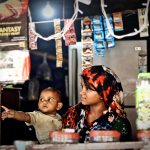
Empowering Women in the Informal Sector: Vyapeksha’s Role in Advancing Dignity, Independence, and Economic Equity
Dr. Sunanda Jha
Founder& Director Vyapeksha Foundation
India’s informal economy is vast, employing an estimated 93% of the country’s workforce. Within this informal sector, women make up a disproportionately large share, representing around 35% to 40% of the total workforce. Despite facing systemic challenges such as low wages, precarious working conditions, and lack of social security, women engaged in the informal economy are crucial agents of economic resilience and growth. Empowering these women is not only vital for promoting gender equality but also for driving India’s broader economic development.
This article explores the role of women in India’s informal economy, presents key statistics, and examines how empowering them can foster dignity, independence, and long-term socio-economic benefits.
The Size and Scope of India’s Informal Economy
The informal sector in India encompasses a wide range of occupations, including agriculture, street vending, domestic work, construction, and small-scale manufacturing. According to NITI Aayog, the informal sector constitutes about 50% of India’s GDP and employs around 93% of the workforce, with women making up a significant portion of these workers.
Women’s Participation in the Informal Economy
Women in India predominantly work in the informal economy due to various socio-economic barriers, including limited access to formal education, discrimination in the formal labor market, and traditional gender roles that tie them to domestic and caregiving duties. As of 2022, it is estimated that 90% of working women in India are employed in the informal sector. This includes women engaged in low-wage jobs like street vending, domestic work, and home-based manufacturing, as well as those involved in micro-entrepreneurship.
Key Statistics on Women in the Informal Economy
40% of India’s female workforce is employed in agriculture, which is largely informal. Women account for 60% of agricultural laborers, yet they remain largely unrecognized and underpaid compared to male workers.
According to the International Labour Organization (ILO), about 80% of female workers in India are engaged in the informal sector, making it one of the highest rates globally.
A 2018 report by the ILO noted that women in the informal sector earned 30-40% less than their male counterparts for the same work, reflecting a gender pay gap even within informal occupations.
These figures underscore the importance of addressing gender-specific challenges in the informal economy, where women’s economic activities are often undervalued and their contributions are invisible in national statistics.
The Benefits of Empowering Women in the Informal Sector
Despite the challenges, the informal sector provides critical opportunities for women to gain financial independence, autonomy, and a sense of dignity. Empowering women in the informal economy can have far-reaching social and economic benefits for individuals, families, and communities.
1. Economic Empowerment through Entrepreneurship
One of the most significant pathways for women’s empowerment in India’s informal economy is entrepreneurship. Women in the informal sector often run small businesses, such as street vending, tailoring, home-based manufacturing, and providing services like childcare and cleaning. By owning and managing these small businesses, women gain financial independence and greater control over their lives.
Micro-entrepreneurship has proven to be a powerful tool for empowering women in rural and urban India. According to the Ministry of Micro, Small, and Medium Enterprises (MSME), over 20 million women entrepreneurs are involved in small-scale business ventures across the country, contributing significantly to local economies.
The Self-Help Group (SHG) model, widely adopted in rural India, has played a key role in promoting women’s entrepreneurship. A report by NABARD (National Bank for Agriculture and Rural Development) shows that over 10 million women are engaged in SHGs, helping them access credit, savings, and other financial resources that enable them to start and sustain businesses.
2. Increased Financial Independence and Social Status
Economic independence is one of the most immediate benefits for women working in the informal sector. A study by the Indian Institute of Dalit Studies in 2021 found that women who participate in informal work report higher levels of decision-making power in their households, greater access to education for their children, and improved health outcomes.
This empowerment also leads to increased social status for women. A study by the United Nations Development Programme (UNDP) revealed that 78% of women in India involved in microfinance schemes, such as SHGs, reported increased respect within their families and communities. This is crucial for breaking the cycle of dependence on male family members and providing women with the agency to make life-changing decisions.
3. Improved Family and Community Well-Being
Women in India who gain financial independence often use their earnings to improve the lives of their families. Research by the World Bank indicates that women tend to allocate their income toward family health, children’s education, and nutrition. As a result, when women earn and control household income, children—especially daughters—tend to benefit more from better educational outcomes and improved health.
In rural India, for example, women who work in agriculture or are part of small agricultural cooperatives are more likely to invest in sustainable farming practices and improve food security for their families. A report by the Indian Council for Research on International Economic Relations (ICRIER) found that women farmers are more likely than their male counterparts to adopt eco-friendly agricultural practices, benefiting both their families and the environment.
Barriers to Empowerment and the Need for Policy Interventions
Despite the significant contributions of women in the informal economy, they face considerable barriers that hinder their full empowerment. These include:
1. Lack of Legal Protection and Social Security
One of the most pressing issues for women in India’s informal economy is the absence of legal protections. Informal workers, including domestic workers and street vendors, often lack access to labor rights such as minimum wages, social security benefits, health insurance, and maternity leave. This creates a precarious working environment for women, making them vulnerable to exploitation.
The Unorganised Workers’ Social Security Act (2008) and the Street Vendors (Protection of Livelihood and Regulation of Street Vending) Act (2014) are steps toward formalizing labor rights for informal workers. However, the implementation of these laws remains weak, and many women still lack the necessary legal protections.
2. Gender-Based Discrimination and Wage Inequality
Women in the informal economy are often subject to gender-based discrimination, both in terms of the work they are expected to do and the wages they are paid. According to the National Sample Survey Office (NSSO), women in India earn 30% less than their male counterparts in similar informal roles. Gender discrimination in wages is particularly pronounced in sectors like domestic work, where women are paid significantly less than men for similar tasks.
3. Limited Access to Credit and Financial Services
Access to finance remains a significant challenge for women in the informal sector. Despite the widespread success of microfinance initiatives, a 2019 report by the RBI found that women in rural India still face difficulty accessing loans from formal financial institutions. This limits their ability to expand their businesses and improve their livelihoods.
4. Lack of Education and Skills Training
A significant portion of India’s informal workforce, particularly women, lacks formal education and vocational training. According to India’s National Rural Livelihood Mission (NRLM), 60% of women working in rural areas do not have any formal training, which limits their potential to move into more skilled, higher-paying jobs within the informal sector.
Empowering women in the informal sector in India is not just an economic imperative but a societal necessity. Women in the informal economy contribute significantly to the country’s GDP, and their empowerment can drive greater economic growth, reduce poverty, and foster gender equality.
However, for real change to occur, India must strengthen policies that ensure legal protection, enhance access to finance, promote gender equality in wages, and provide education and vocational training. By investing in these areas, India can create a more inclusive economy that allows women in the informal sector to thrive—ultimately leading to a more just, prosperous, and sustainable future for all.
How Vyapeksha Can help in Empowering Women in the Informal Sector: A Path to Dignity and Independence
Vyapeksha NGO, with its mission to promote social justice, economic equity, and sustainable development, can play a transformative role in empowering women in India’s informal sector. Given the challenges that women face—such as lack of legal protection, wage inequality, limited access to financial resources, and gender-based discrimination—Vyapeksha can implement targeted interventions to address these issues and empower women to achieve dignity and independence. Below are several key ways in which Vyapeksha NGO can contribute to this crucial effort:
1. Legal Advocacy and Rights Awareness
A significant challenge for women in the informal sector is their lack of awareness regarding their rights and the limited legal protections available to them. Vyapeksha can empower women by educating them about their labor rights, legal protections, and social security benefits. The NGO can:
Conduct legal literacy workshops to inform women about their entitlements, including minimum wage laws, maternity benefits, and social security schemes.
Partner with legal aid organizations to provide free legal counsel and representation to women facing exploitation or unfair treatment in the workplace.
Advocate for policy reforms at local, state, and national levels to improve legal protections for informal workers, ensuring that women have access to the same labor rights and benefits as formal sector workers.
Example Impact:
Vyapeksha could launch a “Know Your Rights” campaign, where women in rural areas or urban slums are given simple, understandable resources outlining their legal rights, such as the Street Vendors Act and the Unorganised Workers’ Social Security Act, thus providing them with tools to claim their rightful benefits.
2. Microfinance and Access to Credit
Limited access to finance is a major barrier to women’s entrepreneurial activities in the informal sector. Vyapeksha can bridge this gap by facilitating microfinance opportunities, helping women gain access to credit and loans. The NGO could:
Establish partnerships with microfinance institutions (MFIs) or provide small seed grants to women starting or scaling their businesses.
Offer financial literacy programs to help women manage loans, savings, and investment strategies to grow their businesses sustainably.
Create savings and credit cooperatives (Self-Help Groups) that pool resources from women in the informal sector to support each other’s business ventures.
Example Impact:
Vyapeksha could set up community microfinance programs specifically targeting women involved in small businesses, like street vending or tailoring, providing them with the tools and resources to grow their businesses, increase profits, and reinvest in their families and communities.
3. Skill Development and Vocational Training
Lack of skills and education limits women’s opportunities in the informal sector, often confining them to low-paying, low-skilled jobs. Vyapeksha can play a crucial role in providing vocational training and skill development that will enable women to secure better-paying jobs and improve their entrepreneurial prospects. Vyapeksha can:
Offer vocational training programs focused on sectors where women are already employed, such as sewing, food processing, housekeeping, and retail, but also in new areas like digital literacy, e-commerce, and financial management.
Collaborate with local industries and businesses to create job placement and apprenticeship opportunities for trained women.
Promote entrepreneurship skills by offering training in marketing, business management, and financial planning, empowering women to create and scale their businesses.
Example Impact:
Vyapeksha could offer training workshops on digital skills for women street vendors or home-based workers, helping them learn how to manage their businesses online, access new markets, and increase their earnings.
4. Health and Social Security Services
Women in the informal economy are often excluded from social security schemes and healthcare benefits. Vyapeksha can ensure that women in the informal sector receive adequate healthcare, maternity benefits, and social security protections by:
Providing access to affordable healthcare through partnerships with health clinics, offering services like maternal health care, general checkups, and health awareness campaigns.
Advocating for the inclusion of informal sector workers in national and state health and social security schemes, ensuring that women are able to access government-run programs like the Pradhan Mantri Jan Arogya Yojana (PMJAY).
Setting up mobile health clinics or organizing medical camps in areas where women in the informal sector work, ensuring that they can access basic health services without disrupting their daily work schedules.
Example Impact:
Vyapeksha could work with local health organizations to launch a mobile health clinic that visits informal labor hubs, offering free healthcare services, including maternal health checkups for women workers, and educating them about their rights to health benefits.
5. Building Collective Strength through Self-Help Groups (SHGs)
One of the most effective ways to empower women in the informal sector is by building solidarity through Self-Help Groups (SHGs). Vyapeksha can create and support SHGs that provide women with:
A platform to network and share knowledge, which can improve their bargaining power and help them advocate for better wages, working conditions, and access to services.
A safe space for financial pooling that allows members to access microloans, provide mutual support in times of crisis, and collaborate on income-generating activities.
A collective voice to demand improvements in the policy landscape, such as advocating for labor laws that recognize the rights of informal sector workers and push for wage parity.
Example Impact:
Vyapeksha could establish SHGs for female street vendors in urban centers, enabling women to collaborate on marketing their goods, share access to better products at lower prices, and push for better infrastructure and legal recognition.
6. Raising Awareness and Advocacy for Gender Equality
To achieve true empowerment, gender-based discrimination must be addressed. Vyapeksha can spearhead initiatives aimed at challenging and changing societal attitudes toward women in the informal economy. The NGO can:
Launch awareness campaigns on gender equality and the importance of recognizing women’s contributions to the informal economy, challenging traditional gender norms that restrict women’s economic freedom.
Work with policymakers and stakeholders to promote gender-sensitive labor policies that protect the rights of women in informal work.
Advocate for the formalization of informal work by pushing for better integration of informal sector workers into the formal economy, which would include better legal protection, health insurance, and pension schemes for women workers.
Example Impact:
Vyapeksha could partner with media outlets and local leaders to conduct campaigns that highlight the contributions of women in informal sectors, such as agriculture and domestic work, raising public awareness about their vital role in the economy and society.
Conclusion: A Comprehensive Approach to Empowerment
Vyapeksha NGO has the potential to significantly transform the lives of women in India’s informal sector by adopting a multi-faceted approach to empowerment. By focusing on legal advocacy, microfinance, skill development, social protection, collective action, and gender equality, Vyapeksha can create a sustainable ecosystem that uplifts women from marginalization to independence and dignity.
These efforts will not only improve the economic and social standing of individual women but also contribute to India’s broader goals of gender equality, inclusive growth, and sustainable development. Through targeted interventions, Vyapeksha can be a powerful force in making India’s informal economy a more equitable and empowering space for women.
References
Indian Institute of Dalit Studies (2021). Impact of Informal Sector Work on Women’s Empowerment in India.
NITI Aayog (2022). Report on the Informal Economy in India.
International Labour Organization (ILO) (2021). Women and the Informal Economy: A Statistical Overview.
National Bank for Agriculture and Rural Development (NABARD) (2020). Self-Help Groups in India: A New Model for Women’s Empowerment.
Ministry of Micro, Small, and Medium Enterprises (MSME) (2022). Annual Report on Women Entrepreneurs.
World Bank (2020). Empowering Women in India: Lessons from Microfinance Programs.
National Sample Survey Office (NSSO) (2019). Gender Disparities in the Informal Sector: A Statistical Study.
Jos loas
Sunt in culpa qui officia deserunt
Ant in culpa qui officia deserunt
Excepteur sint occaecat cupidatat non proident, sunt in culpa qui officia deserunt mollit anim id est laborum. perspiciatis unde omnis iste natus error sit voluptatem accusantium doloremque laudantium, totam rem aperiam, eaque ipsa quae ab illo inventore veritatis et quasi architecto beatae vitae dicta sunt Welcome to WordPress. This is your first post. Edit or delete it,